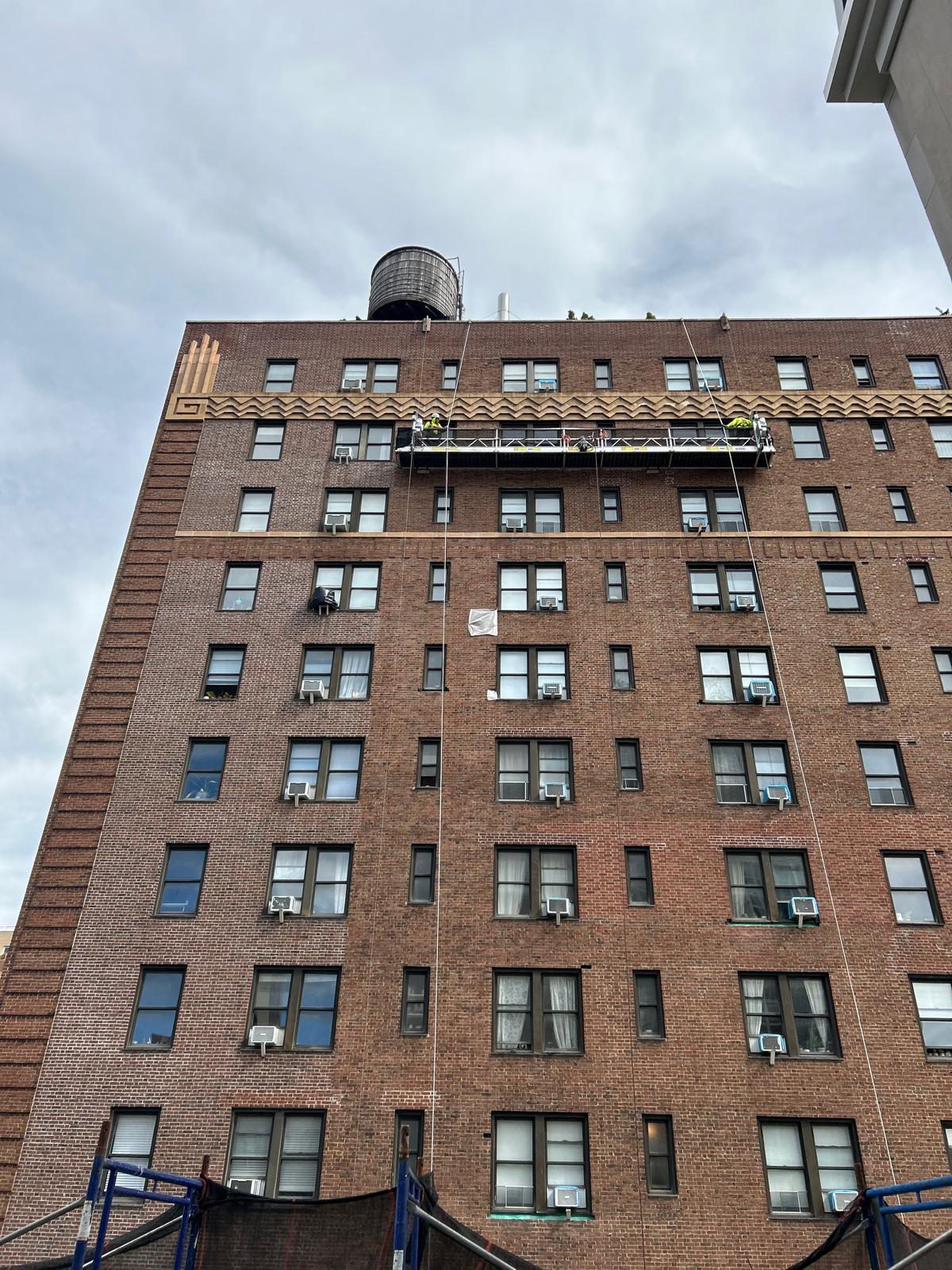
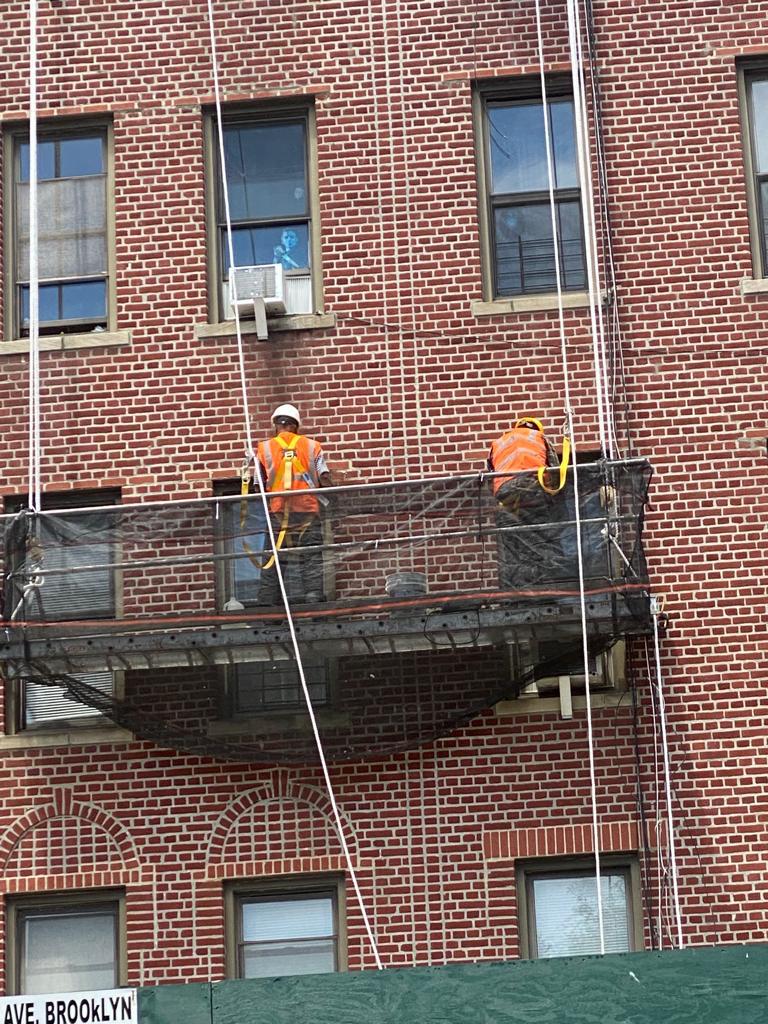
Local Law 11 (FISP) Facade Inspection & Repair | NYC
Local Law 11 requires owners of buildings six stories or taller to have their facades inspected every five years under the Facade Inspection Safety Program (FISP). Missing a filing deadline or receiving an unsafe (SWARMP) rating can mean DOB violations, fines, and a mandatory sidewalk shed until repairs are completed. Ayat Contracting Inc. manages the full process — inspection coordination, repair work, and compliance filing support — for building owners and co-op/condo boards across NYC.
Request a Local Law 11 Compliance Assessment or call 347-330-3057.
What Is Local Law 11?
Local Law 11 of 1998 (the current program is officially called FISP — Facade Inspection Safety Program) requires owners of NYC buildings taller than six stories to have a qualified professional inspect the exterior facade every five years. The goal is straightforward: catch loose brick, failing parapets, and deteriorating facade material before it becomes a public safety hazard. Building owners are legally responsible for filing inspection reports with the DOB on schedule, regardless of whether they know the law applies to them.
Which Filing Cycle Is Your Building In?
FISP runs on a repeating five-year cycle — the current one is Cycle 9, covering 2025 through 2029. Within each cycle, buildings are assigned to one of three filing subcycles based on the last digit of the building’s block number, which is how the DOB spreads inspections out instead of requiring every building citywide at once. If you’re not sure which subcycle your building falls into, this is one of the first things we check during a compliance assessment — filing early relative to your subcycle deadline gives you more time to complete repairs before penalties start.
What Happens If Your Building Gets a SWARMP Rating
Every FISP inspection results in one of three ratings: Safe, Safe with a Repair and Maintenance Program (SWARMP), or Unsafe. A SWARMP rating means the facade has conditions that need to be corrected — spalling concrete, cracked or displaced brick, failing sealant, or a compromised parapet — but the building isn’t in immediate danger. An Unsafe rating requires immediate protective measures, typically a sidewalk shed, and a filed repair plan. Either rating starts a clock: the DOB expects documented progress, and a building that sits in SWARMP or Unsafe status without action accumulates violations.
Penalties for Missing the Deadline
Late FISP filings trigger DOB penalties that increase the longer the filing stays open, on top of continued sidewalk shed rental costs if one is already up. Buildings that ignore a SWARMP or Unsafe rating risk escalating violations and, in the worst cases, emergency DOB-ordered repairs billed back to the owner at a premium. Addressing facade issues proactively is almost always less expensive than letting a filing lapse.
Our Local Law 11 Process
- Facade condition assessment — identifying spalling concrete, cracked brick, failing parapets, and unsafe cladding before they become violations
- Parapet wall inspection & repair — a common source of SWARMP ratings on older NYC buildings
- Facade restoration — brick repointing, concrete repair, and masonry replacement to bring a building back to compliant condition
- Waterproofing integration — addressing the water infiltration that typically causes facade deterioration in the first place, not just the visible damage
- Filing-cycle coordination — working around your borough’s filing subcycle so repairs finish before your deadline, not after
Local Law 11 Compliance Across NYC
Brooklyn — brownstones and pre-war multifamily buildings with aging brick and parapet walls are common SWARMP candidates. See our Brooklyn services.
Manhattan — older high-rises with masonry and terra cotta facades often need specialized restoration work.
Queens — mixed low- and mid-rise building stock with a range of facade materials and filing subcycles.
The Bronx — many buildings approaching or past their filing deadline due to deferred maintenance.
Staten Island — fewer buildings fall under the six-story threshold, but those that do face the same inspection requirements.
Frequently Asked Questions
How much does Local Law 11 repair cost?
Cost depends on the extent of facade damage, building height, and whether a sidewalk shed is required during repairs. Minor SWARMP repairs (repointing, sealant, isolated concrete patching) cost significantly less than a full facade restoration on an Unsafe-rated building. We provide a written estimate after the initial assessment.
Do I need a sidewalk shed?
A sidewalk shed is required when a facade condition is rated Unsafe or poses a risk to pedestrians below, and it must stay up until repairs are completed and signed off. We work to complete repairs quickly specifically to minimize how long a shed — and its rental cost — stays in place.
How long does the Local Law 11 process take?
A straightforward SWARMP repair can be completed in a matter of weeks. Full facade restoration on an Unsafe-rated building takes longer, depending on scaffolding/shed logistics, scope of masonry work, and DOB filing turnaround. We give you a realistic timeline after the initial inspection, not before.
What’s the difference between Local Law 11 and FISP?
They’re the same program. Local Law 11 of 1998 is the original legislation; FISP (Facade Inspection Safety Program) is the DOB’s current name for the ongoing five-year cycle inspection requirement it created.
Who is responsible for filing — the owner or the co-op board?
The building owner is legally responsible for the FISP filing. For co-ops and condos, that responsibility typically falls to the board, which is why boards usually engage a contractor and a qualified inspector (QEWI) early in their filing subcycle rather than waiting for a deadline notice.
Request a Local Law 11 Compliance Assessment or call 347-330-3057 to find out your filing subcycle and get a facade condition assessment scheduled.